
Product Initiative
Maintenance Actionable Insight
Role
Design & Project Lead
Background
Launched in 2015, Alfred operates in 52 markets across North America, supporting over 300,000 residents with its personal assistance services. In 2020, Alfred extended its resident-first technology platform, Alfred OS, to give property owners and operators a unified platform to support all aspects of residential living and property management operations.

Challenge
Responding to residents’ maintenance requests is one of the most crucial aspects of building operations. However, although Alfred OS offers native maintenance management solution, 3rd party solutions such as Yardi Voyage and RealPage have historically taken the main stake in maintenance operations. It created a scenario that property users must constantly switch platforms between Alfred OS and 3rd platforms. Our users were frustrated about the inefficiency and potential loss of data that this cumbersome workflow has caused.
In Q2 2022, I set out to tackle this problem to help unblock maintenance teams using our native solution and increase service efficiency. With the assigned PM and designer pulled onto a higher-priority initiative, I carried both the design and product lead responsibilities through discovery and opportunity definition. This work was also a crucial part of the strategic plan to bring property teams’ tech stacks and workflows onto AlfredOS by building a reliable product foundation in 2022.
Discovery
To uncover unmet needs of maintenance operations and identify opportunities for our customers to adopt our native solutions, I chose to conduct a generative discovery to capture critical nuances of users’ pain points, needs, and desires.
Discovery goals were:
- To understand the needs and goals of our users, particularly when scheduling and managing preventive maintenance work orders.
- Identify our maintenance users’ primary pain points and opportunities for improving their work efficiency when managing preventative maintenance.
To collect both behavioral and attitudinal insight and data, I led the discovery by conducting 8 remote interview sessions with property managers and maintenance superintendents from different market segments and geography. I also visited partner resident properties to conduct contextual inquiries and further understand maintenance operation challenges and daily work routines.

Insights
After affinity mapping and synthesizing all the findings, the significant insights into interviewees’ needs and desires were surprisingly diverse. I identified five categories of opportunity: Analytics, Categorization, Inspection, Approval, and Resident Onboarding.

Prioritization
My initial instinct was to bundle the more readily feasible opportunities into a potential V2 and start a work pipeline. But large feature bundles are slow to capture engagement momentum and carry real risk. To pressure-test that instinct and build shared understanding, I introduced prioritization frameworks to evaluate each opportunity rather than commit on gut.
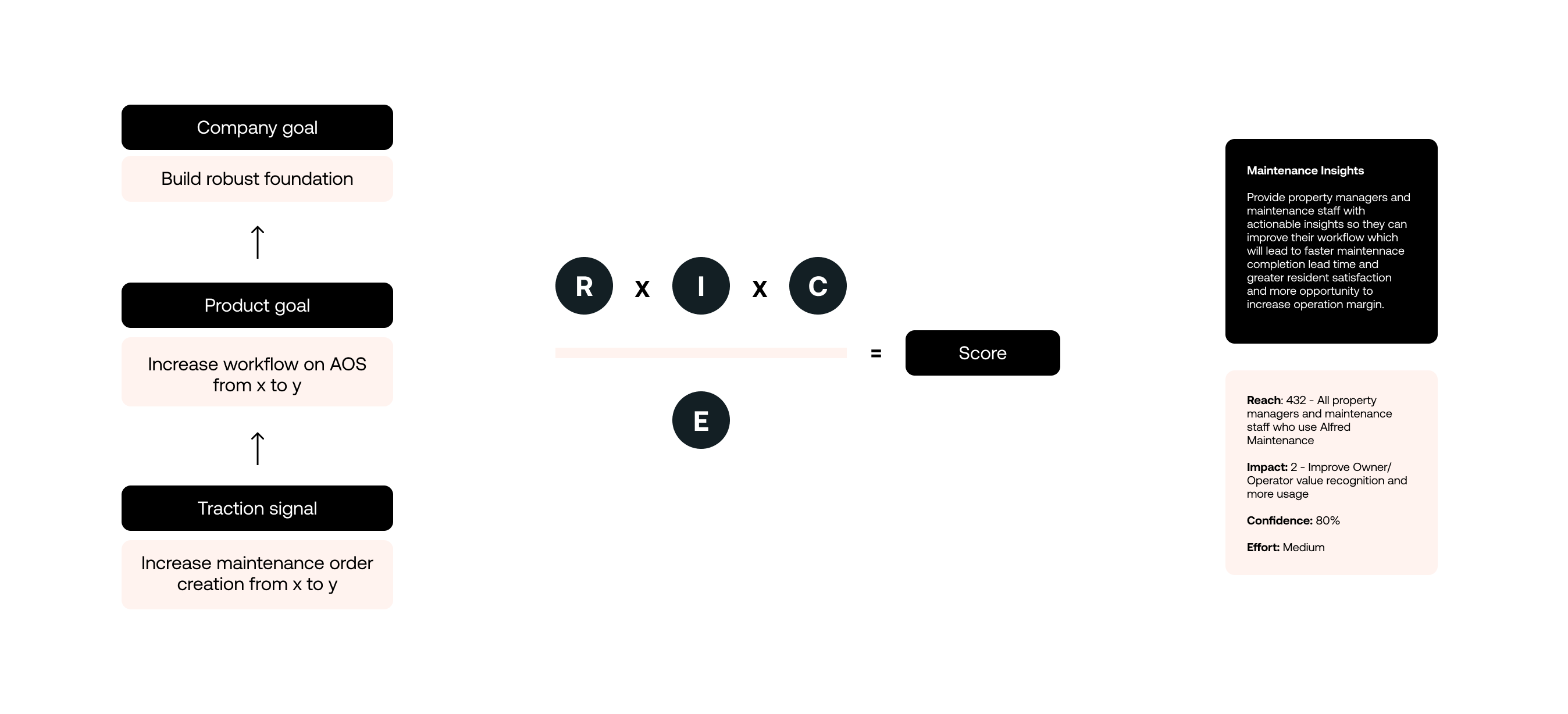
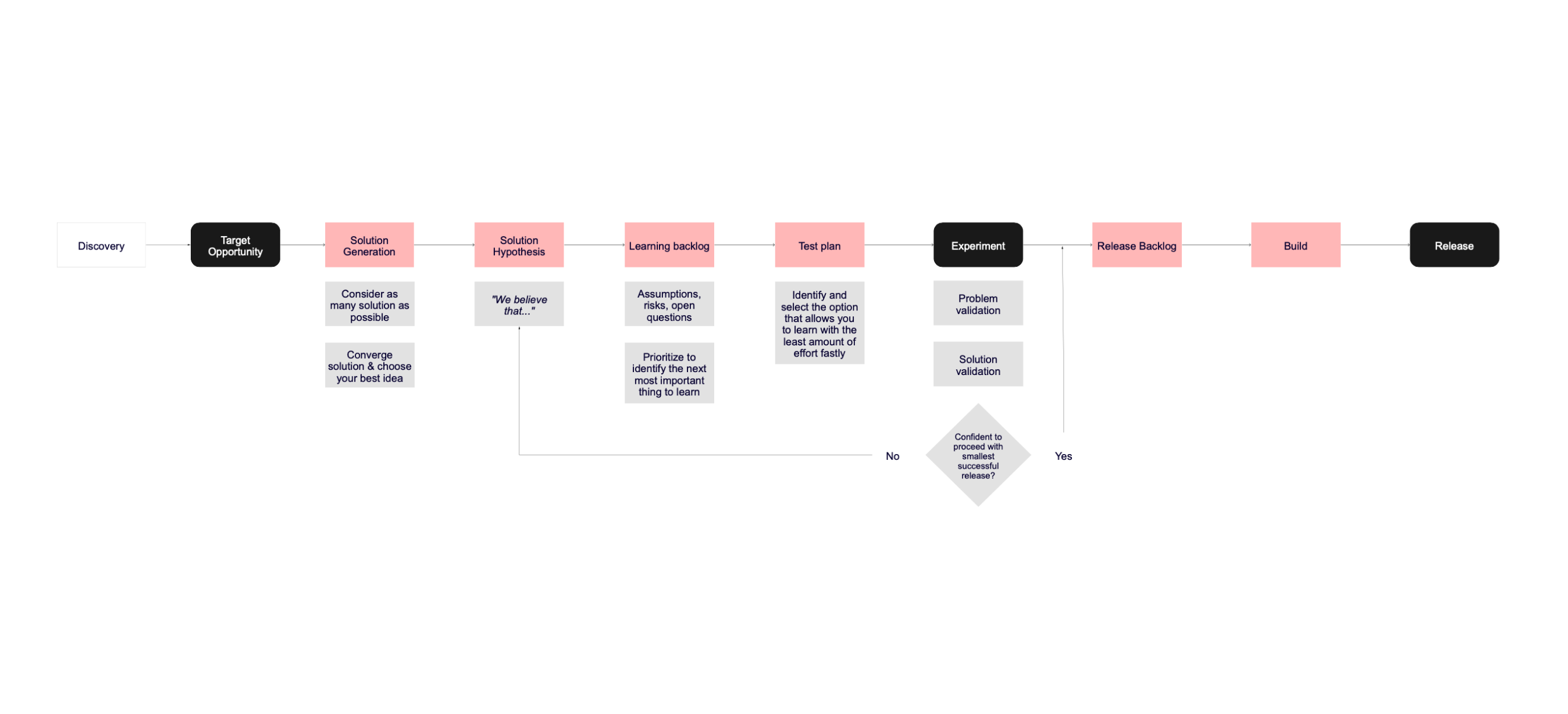
I first assessed each opportunity’s strategic alignment against our company goal and high-level product KPIs, then used RICE scoring to weigh reach, impact, confidence, and effort. To bring engineering in early and keep us honest, I introduced a lean process map so the team would optimize for continuously learning from users rather than for how much we could ship.
Target Opportunity
After weighing every opportunity against its RICE score and the interview evidence, I concluded that actionable data insights were the highest-leverage bet for maintenance operations. This capability helps property managers proactively catch problems, deploy labor more effectively, and work with Owners on financial planning — a mission-critical capability that the major property-management platforms have overlooked for years.
Solution Process
Sharing Ideas Collaboratively
Solution Workshop
Until this point, all members of this initiative have been through the discovery process. To continue the learning as a team and efficiently work towards a shared outcome, I gathered all team members across Product, Eng, and ProdOps to ideate solutions to address issues. The goal is to consider all perspectives and find a promising solution.

Risk Assessment
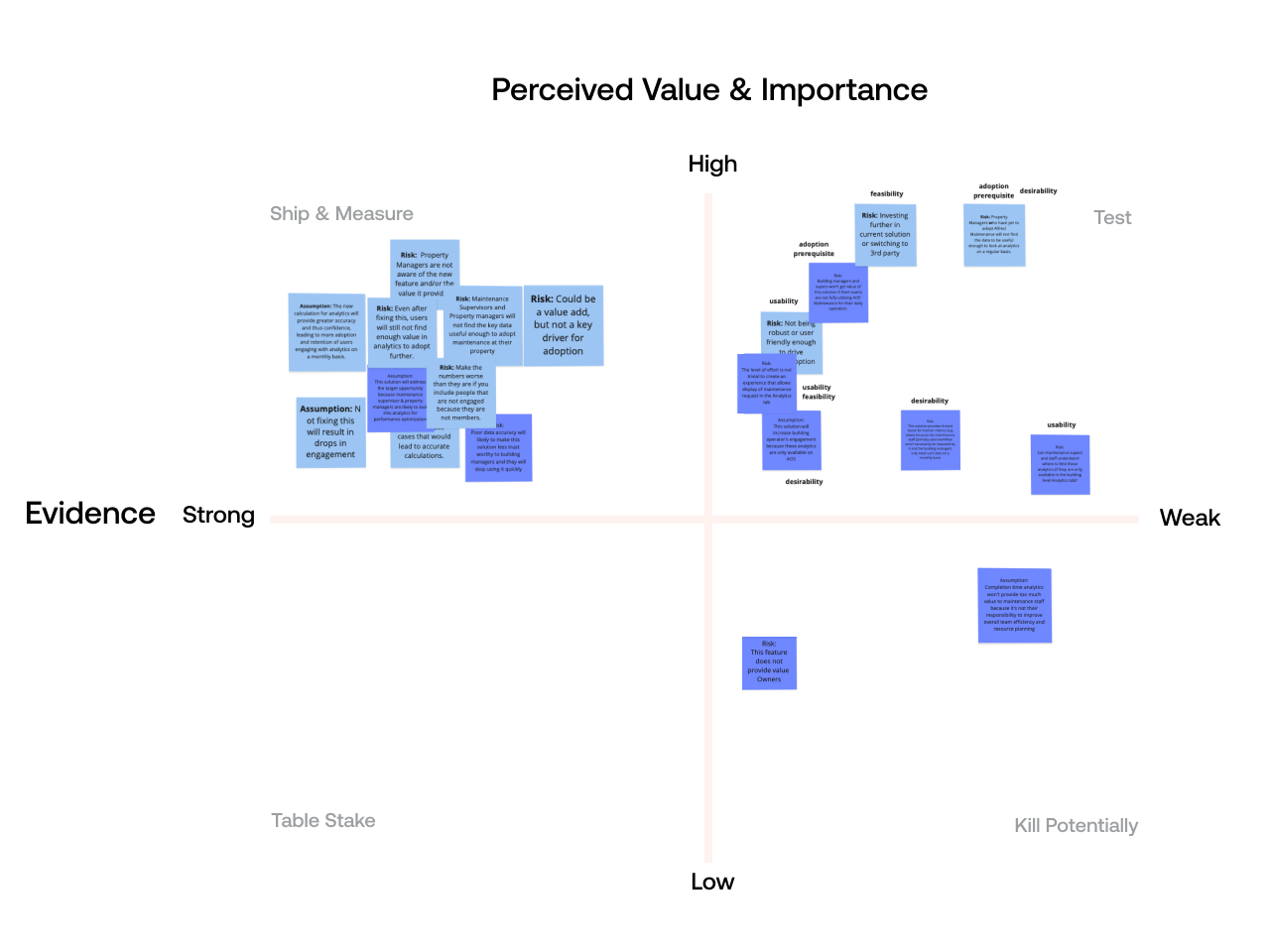
I facilitated a workshop to map all risks and open questions against Perceived Value/Importance and Evidence. It turned out our most outstanding fear and concerns are mostly around Desirability, Information details, and Usability. I converted the items that fall under the High Importance & Low evidence segment to a learning backlog.
Design Factor Matrix
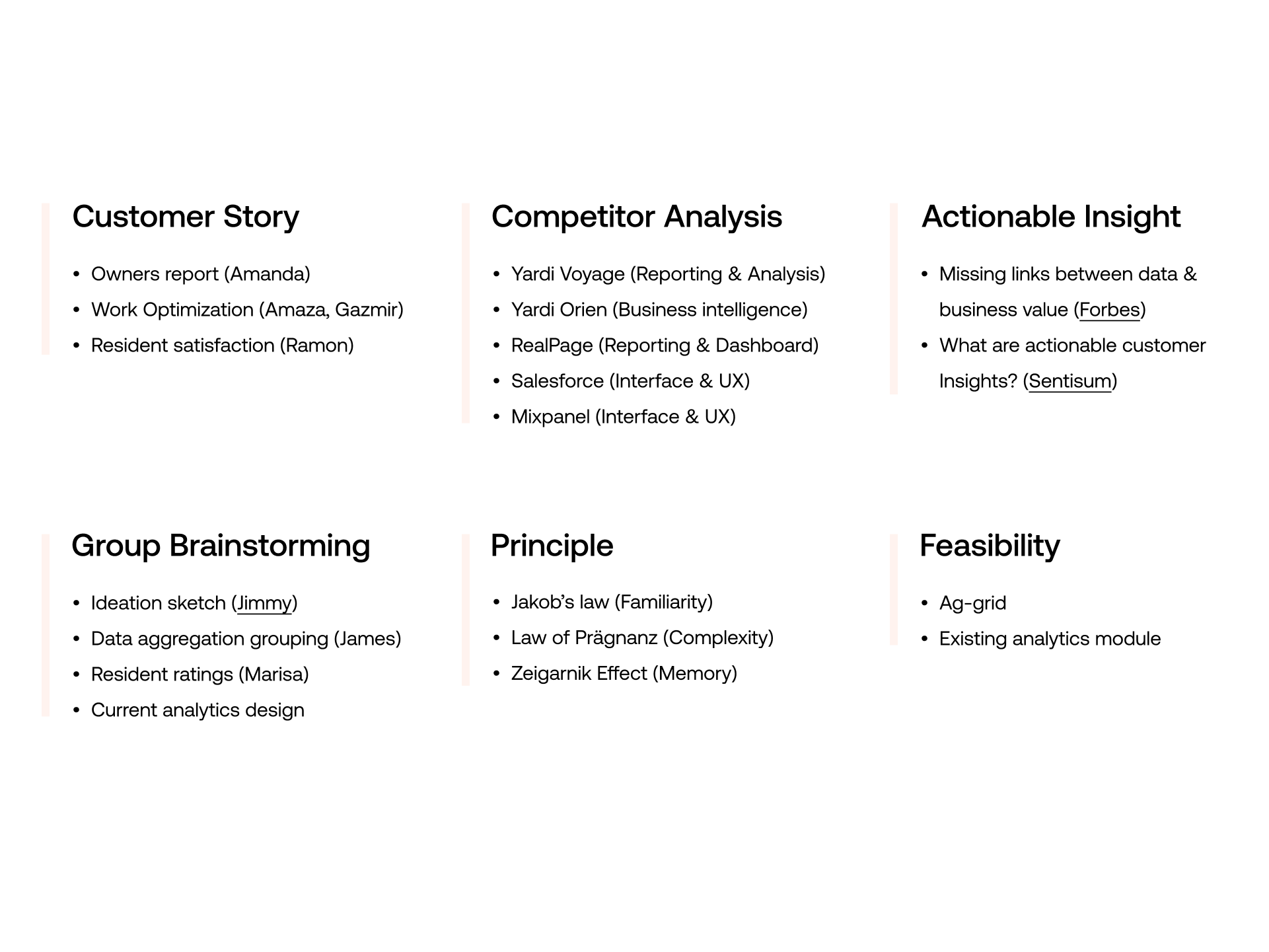
Based on all the insights and ideas gathered, I created a framework that took into consideration of all factors, design principles, and competitor analyses of well-adopted maintenance tools in property management.
Initial Design
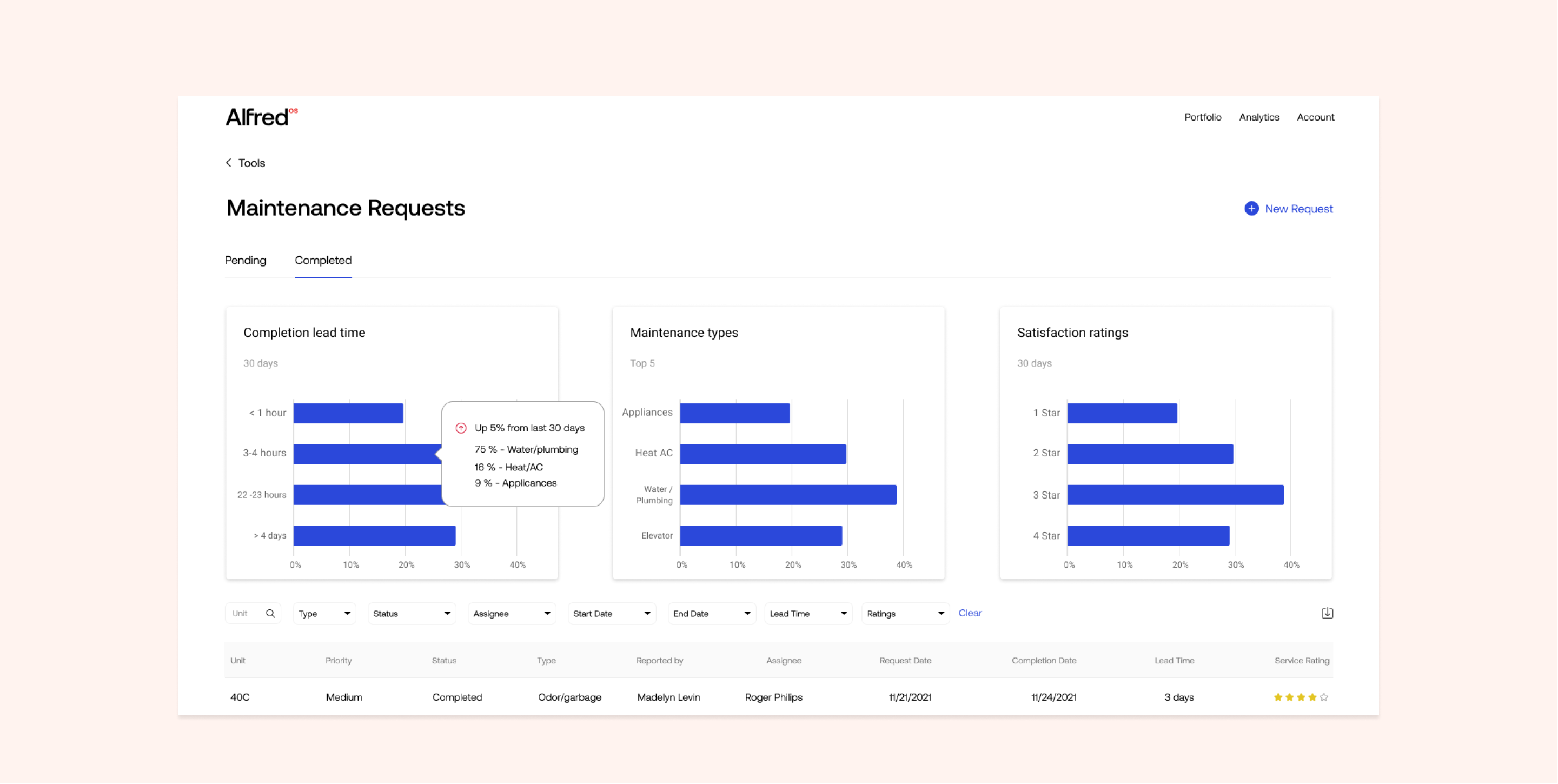
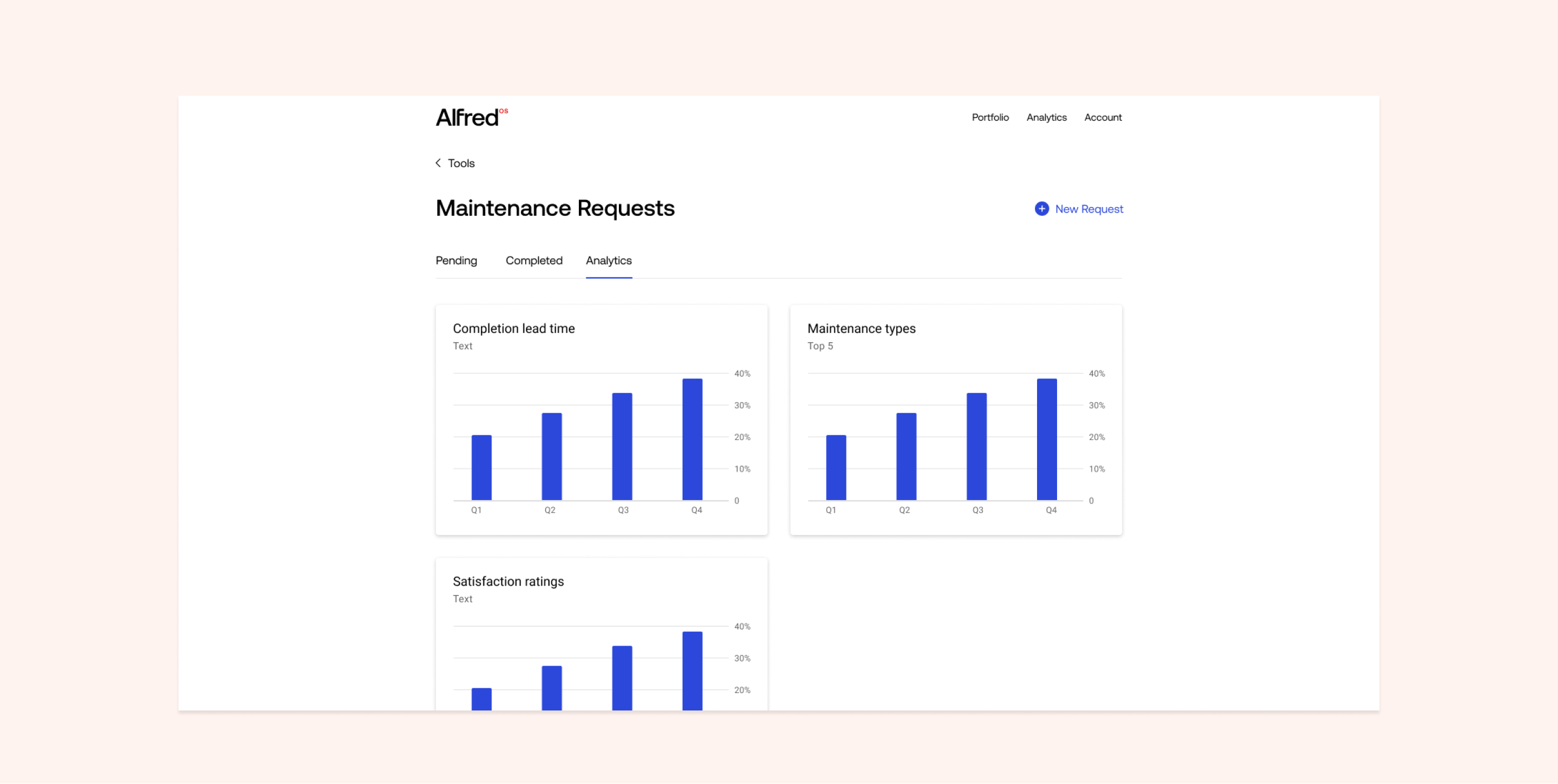
I set the initial design scope concisely to support the minimum need to simulate an experiment quickly rather than a full deliverable spec. I created experience goals to define the direction of the new actionable insights and related experiences.


Experiment
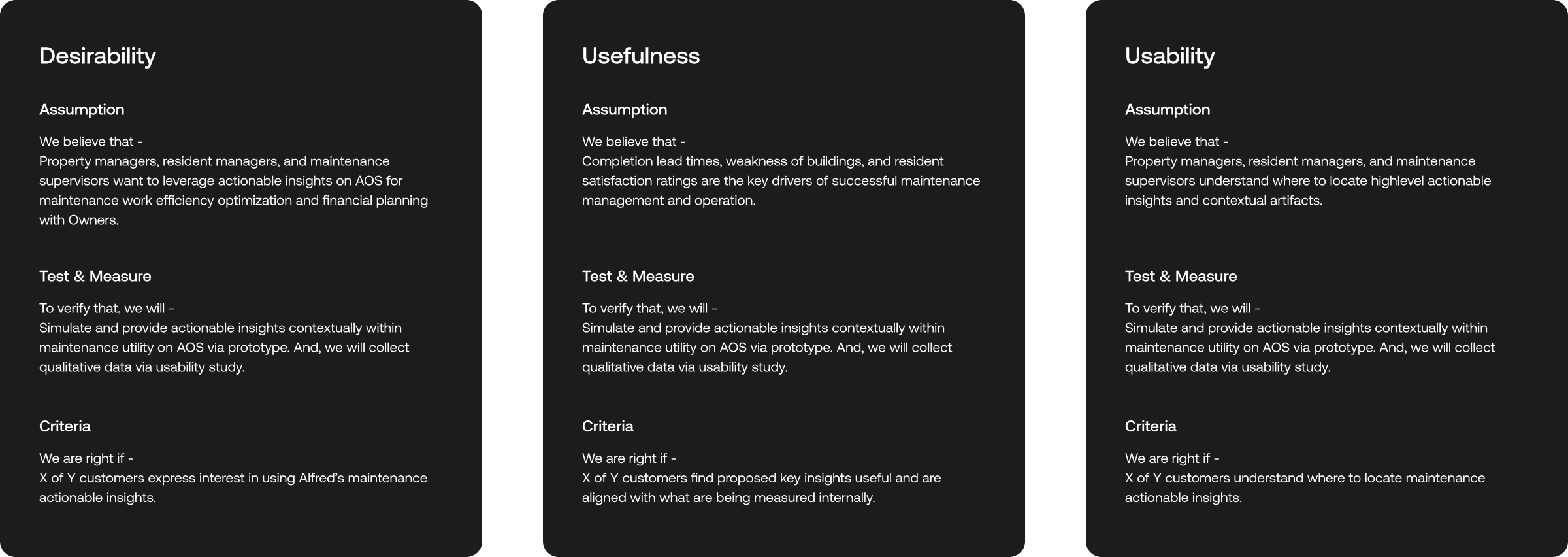
With limited resources to recruit a large test group, I chose a mixed methodology blending contextual interview and usability testing to validate our riskiest assumptions efficiently. The goal was to gain enough confidence to move forward without slipping into analysis paralysis.
The experiment validated the hypothesis and gave us confidence that actionable insights genuinely addressed users’ needs to use data for work and resource planning.
Final Solution
Alfred Maintenance Insights
We enhanced the data content, visual details, and information grouping based on the learning of the experiment and usability study. The new experience allows property teams to optimize maintenance efficiencies and provide better transparency to Owners. It’s a mission-critical capability that all major PMS platforms have overlooked for years.
We are confident this is the path to move forward to unlock more customer and business value.

Surface
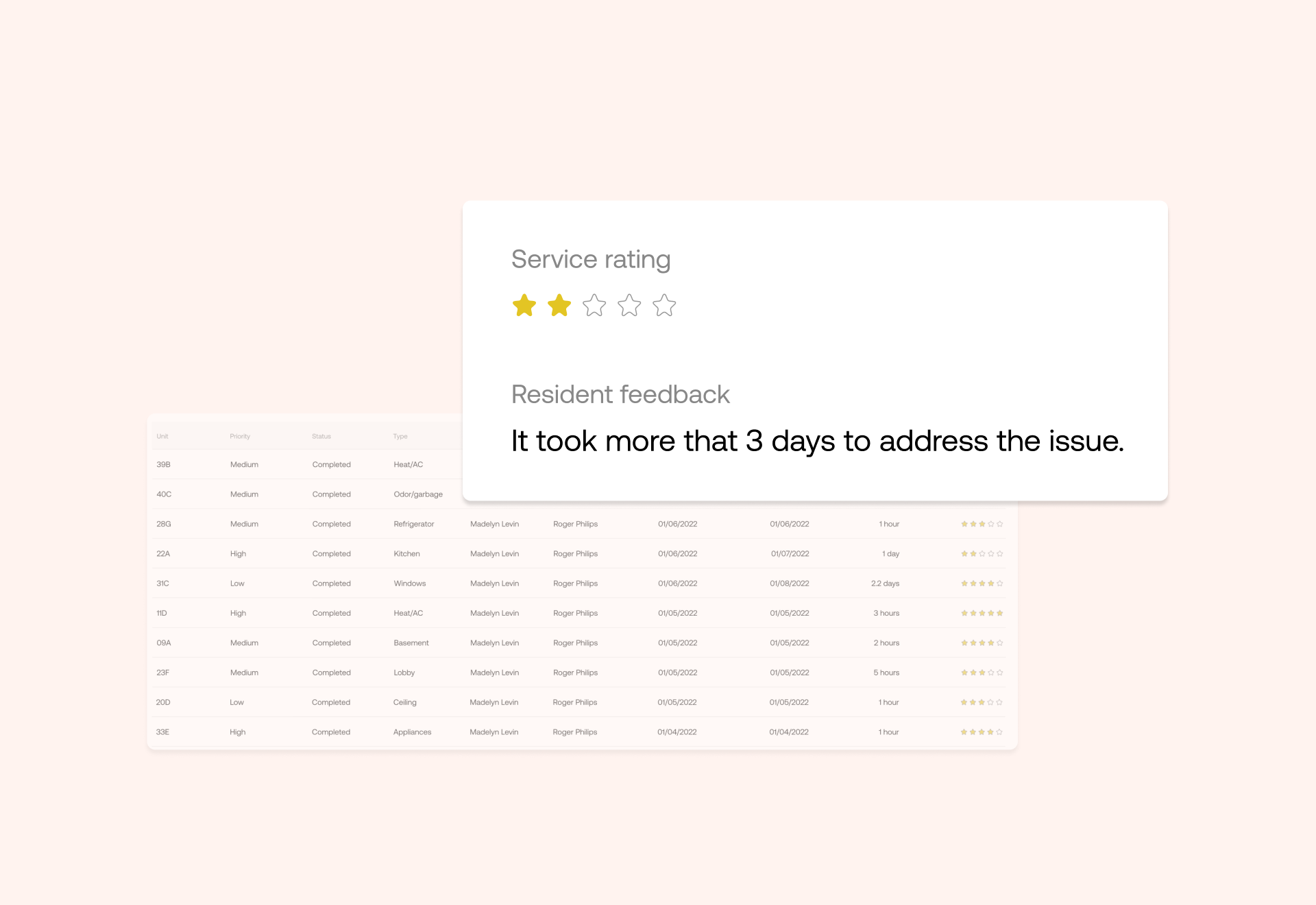
Maintenance supervisors can now quickly locate essential metrics alongside historical work orders. The mass work order data can be updated to reflect these metrics complementarily when the titles are triggered. Quantitative data, work order details, and qualitative resident comments are closely connected to form a matrix that effectively reflects the efficiency and success of any maintenance operations.

Sense
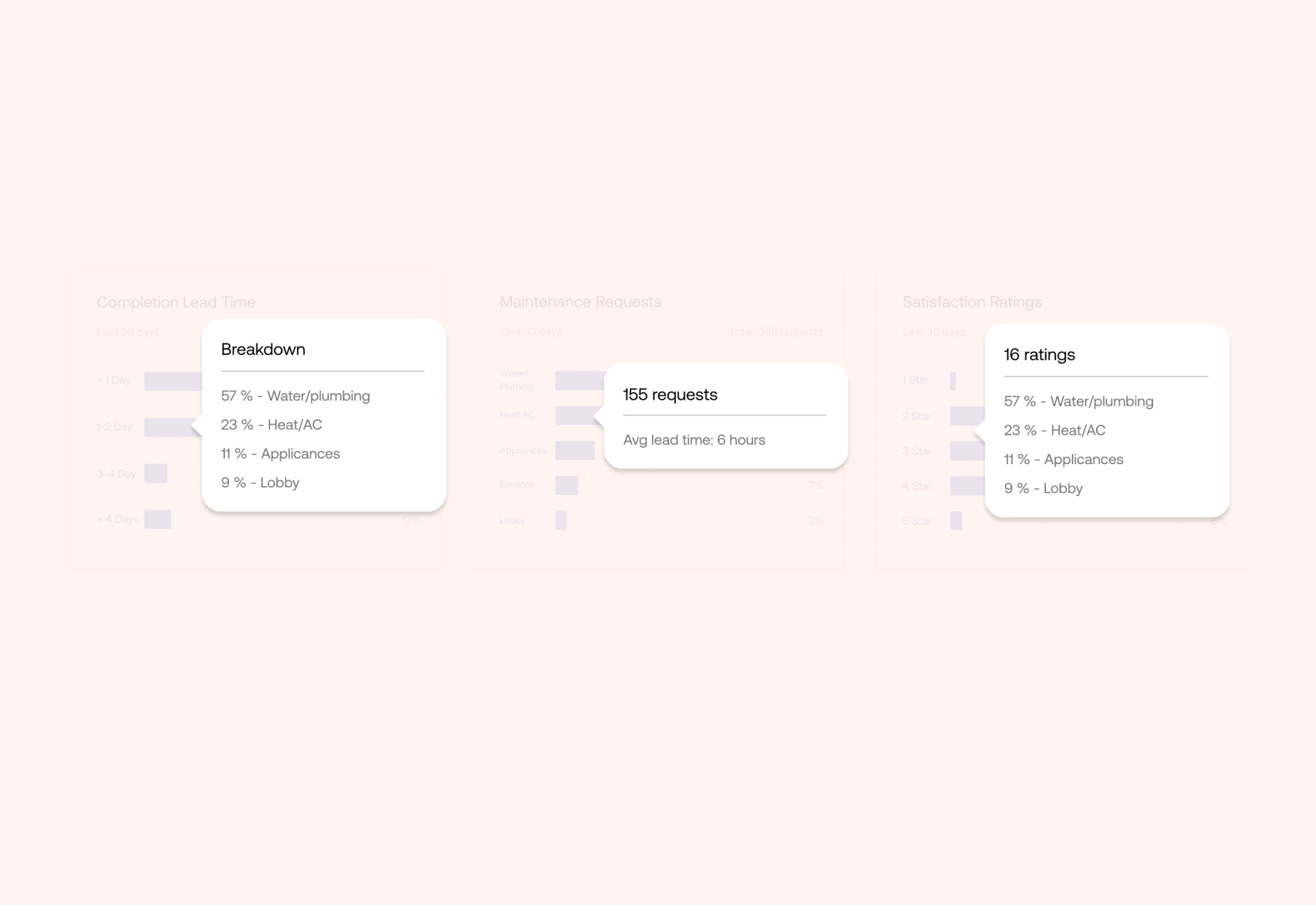
With contextualized data breakdowns, maintenance supervisors and staff can quickly have a holistic view of the property and promptly identify weaknesses. This unique capability not only enables meaningful maintenance prevention but also allows more accurate budget planning for property owners.
Execute
Supervisors can drill down data from high-level aggregation to individual work orders to fully understand the “Why?” behind each rating and the high-level data. They can now address resident concerns much more efficiently and accurately. The actionable insight further enables customer-centric maintenance operations to elevate resident satisfaction and NPS.
Outcome
Maintenance Insights shipped to all property users in Q3 2022. Most importantly, the capability to inform preventive maintenance and budget planning enabled us to land our native maintenance solution in more than 72 new customer buildings — directly advancing Alfred’s strategic goal of pulling property teams’ tech stacks onto AlfredOS. We also saw increases in traction metrics, including maintenance staff logins and new work order creation, and are closely monitoring the longer-term impact on resident renewal.